

Cybercrime is growing rapidly in Nepal — from banking fraud to social media hacking. Businesses, organizations, and even individuals are now actively looking for cybersecurity experts who can protect their systems. If you’re someone who wants a high-demand IT career, then joining an ethical hacking course in Nepal can be your smartest move.
Whether you’ve just completed +2 or you’re looking to switch careers, ethical hacking opens doors to high-paying jobs in Nepal and abroad.
WHAT IS ETHICAL HACKING?
Ethical hacking is the process of legally testing systems, networks, and applications to find security vulnerabilities before hackers can exploit them.
In simple terms:
You learn how hackers think and use that knowledge to protect systems, not harm them.
Ethical hackers are hired by:
- Banks
- IT companies
- Government organizations
- International firms
Ethical Hacking Course in Nepal: Overview
The ethical hacking learning roadmap in Nepal is designed for beginners to advanced learners who want real-world cybersecurity skills.
Details:
- Duration: 3–6 Months
- Level: Beginner to Advanced
This course focuses on hands-on learning, not just theory. Ethical hacking course fees in Nepal typically range from around NPR 15,000 for short bootcamps to NPR 60,000 or more for full CEH-track certification programs.
ETHICAL HACKING LEARNING ROADMAP
Week 1: Networking Fundamentals
- TCP/IP, OSI Model
- IP Addressing
- Network Security Basics
Week 2: Linux & System Basics
- Kali Linux setup
- Command line operations
- File systems & permissions
Week 3: Footprinting & Reconnaissance
- Information gathering
- OSINT tools
- Target analysis
Week 4: Scanning Networks
- Nmap scanning
- Vulnerability scanning
- Network mapping
Week 5: System Hacking
- Password cracking
- Privilege escalation
- Maintaining access
Module 6: Web Application Hacking
- SQL Injection
- XSS attacks
- Website vulnerabilities
Module 7: Malware & Security
- Trojans, viruses
- Malware analysis basics
Module 8: Penetration Testing
- Real-world hacking simulation
- Reporting vulnerabilities
TOOLS YOU NEED TO LEARN
During this cybersecurity course in Nepal, you will get hands-on experience with:
- Kali Linux
- Metasploit
- Nmap
- Wireshark
- Burp Suite
These are industry-standard tools used by professionals worldwide.
TOP 5 FREE ETHICAL HACKING & CYBERSECURITY CERTIFICATIONS
Cisco Networking Academy – Introduction to Cybersecurity
One of the most trusted global platforms for IT training.
What you get:
- Free cybersecurity course access
- Certificate of Completion
- Beginner-friendly learning path
Topics Covered:
- Cybersecurity basics
- Types of cyber attacks
- Security principles
- Digital safety concepts
Fortinet Training Institute – Cybersecurity Awareness & NSE Courses

Fortinet offers free cybersecurity training programs for students worldwide, including Nepal.
What you get:
- Free online cybersecurity courses
- NSE training modules (Network Security Expert path)
- Digital certificates (on completion of modules/exams)
Topics covered:
- Network security fundamentals
- Threats & vulnerabilities
- Firewall and security systems
TryHackMe – Cyber Security Learning Platform
TryHackMe is one of the most popular hands-on ethical hacking learning platforms.
What you get:
- Free learning rooms
- Guided cybersecurity labs
- Certificates for selected learning paths (some paid paths)
Topics covered:
- Ethical hacking basics
- Linux & networking
- Web hacking fundamentals
- Penetration testing labs
ISC2 Certified in Cybersecurity (Entry-Level Program)
ISC2 is a globally recognised cybersecurity organization.
What you get:
- Free training materials (limited-time promotions available)
- Entry-level cybersecurity certification path
- Industry-recognised credential (exam may have a fee depending on offers)
Topics covered:
- Security principles
- Access control
- Network security
- Risk management
Hack The Box Academy – Free Cybersecurity Modules
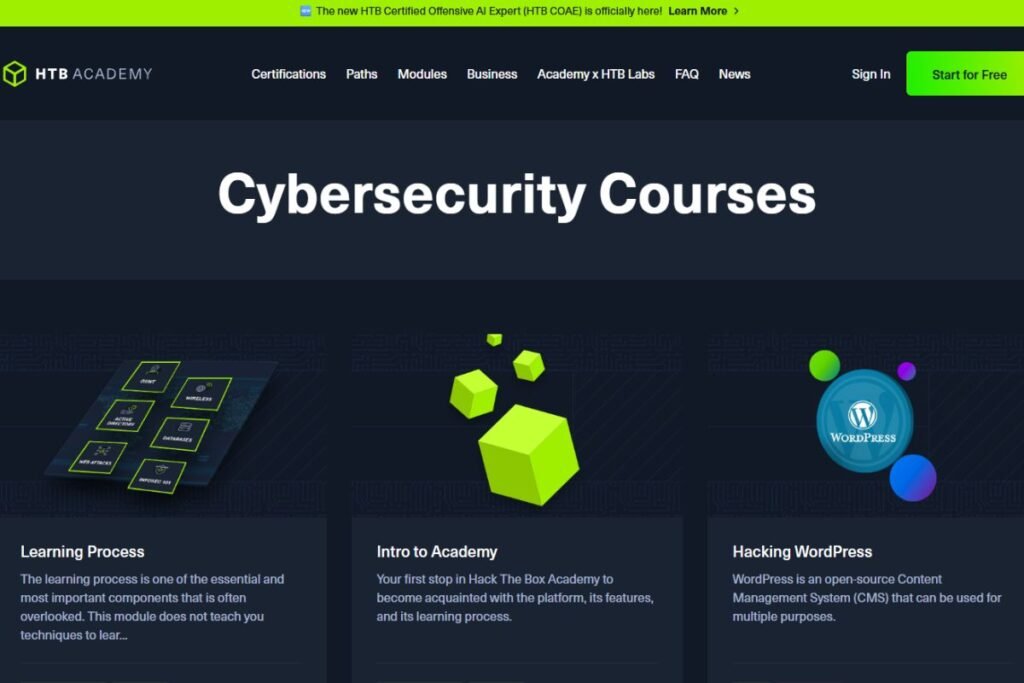
Hack The Box is widely used by ethical hackers and penetration testers worldwide.
What you get:
- Free beginner modules
- Hands-on hacking labs
- Practical cybersecurity training
Topics covered:
- Penetration testing basics
- Web application security
- Linux hacking fundamentals
- Exploitation techniques
This certification helps you apply for cybersecurity jobs in Nepal and abroad.
CAREER OPPORTUNITIES AFTER ETHICAL HACKING COURSE
After completing this course, you can work as:
- Ethical Hacker
- Cybersecurity Analyst
- Penetration Tester
- IT Security Officer
Demand is growing rapidly in Nepal, the USA, Canada, the UK & Australia.
WHY ETHICAL HACKING IS RELEVANT IN BCS (BACHELOR OF COMPUTER SCIENCE)
Computer science today is not just about building applications—it is also about building secure systems. As digital threats increase in Nepal and globally, every software engineer is expected to understand cybersecurity and ethical hacking fundamentals.
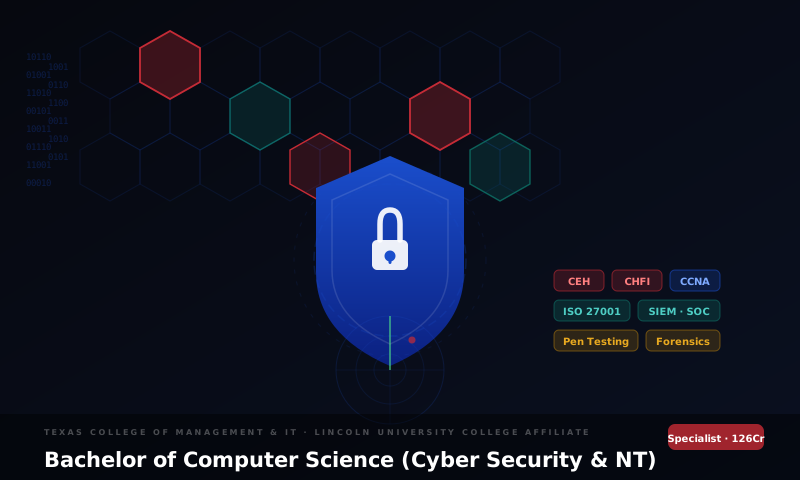
That’s why students enrolling in the Bachelor of Computer Science (BCS) with a network technology & cyber security track at Texas College of Management and IT gain an added advantage when they explore cybersecurity and ethical hacking skills alongside core development. Texas College is also home to Nepal’s first Certified EC-Council Instructor (CEI) for CEH v12, adding real industry credibility to its ethical hacking training.
WHY THIS MATTERS FOR TCMIT STUDENTS?
At institutions like TCMIT, the software engineering program builds a strong foundation in:
- Programming
- System design
- Web development
- Database management
Adding ethical hacking understanding helps students become industry-ready engineers, not just degree holders.
FAQs
What is the best ethical hacking course in Nepal?
The best course is one that offers practical training, real tools, and career support.
Is ethical hacking legal in Nepal?
Yes, ethical hacking is completely legal when done with proper authorization.
How long does it take to learn ethical hacking?
It typically takes 3 to 6 months depending on the course level.
Do I need programming knowledge?
No, basic computer knowledge is enough to start.
What is the salary of an ethical hacker in Nepal?
Beginners can earn NPR 30,000–80,000/month, and experienced professionals earn much more.
FINAL INSIGHT TO START YOUR CYBERSECURITY JOURNEY
Cybersecurity is no longer optional & it is a necessity in today’s digital world. If you are serious about building a career in IT, an ethical hacking course in Nepal can be your gateway to a high-growth profession. Institutions like Texas College of Management and IT are increasingly focusing on skill-based IT education, making such programs more accessible in Kathmandu, Lalitpur & Bhatkapur in Nepal.
Take the first step by exploring training options, comparing course structures, and selecting a program that emphasises practical skills and real-world applications.