



IT & Computer Science Degrees in Nepal: Which One Should You Choose?
📅 July 12, 2026
✍️ Texas College Editorial Team
🕐 14 min read
If you’ve just finished +2 science and typed “best IT course after +2 Nepal” into Google, you’ve probably landed on five different acronyms that all sound like the same thing: BCS, BIT, BSc CSIT, BBIT, and Computer Engineering. They are not the same thing. Each one leads to a different classroom experience, a different accrediting body, and, eventually, a somewhat different career path.
This guide to IT and computer science degrees in Nepal untangles all five, side by side, so you can pick based on what you actually want to do (build software, manage IT systems, specialize in security, or design hardware), not just on which name sounds more familiar. We’ll also cover where cyber security fits in, what your master’s options look like later, and how to judge a college beyond its brochure.

Key Takeaways
- ✓ BCS, BIT, BSc CSIT, and Computer Engineering differ mainly in focus (software vs. business-IT vs. theory vs. hardware) and accrediting body (Tribhuvan University, foreign university, or the Institute of Engineering).
- ✓ Cyber security in Nepal is almost always studied as a specialization track inside a broader IT/CS degree, such as BCS’s Network Technology & Cyber Security track, not as a standalone bachelor’s.
- ✓ After a bachelor’s, an MCS (built around working IT professionals, typically 2 years) is a common next step alongside generic MSc CS options at TU or KU.
- ✓ The “right” degree depends on your interest (coding vs. business vs. theory vs. hardware), not on which acronym is trending among your friends.
In This Article
- IT and Computer Science Degrees in Nepal: Quick Overview
- BCS vs BIT vs BSc CSIT vs Computer Engineering: What’s the Real Difference?
- Cyber Security as a Specialization in Nepal
- Master’s Options After a Bachelor’s in IT/CS
- Career Scope After an IT/CS Degree in Nepal
- Choosing a College for Your IT/CS Degree
- FAQ
- Choosing Your Path Forward
IT and Computer Science Degrees in Nepal: Quick Overview
Nepal offers at least five distinct bachelor’s routes into IT and computer science, and they split mainly by affiliation type and subject focus. Tribhuvan University‘s BSc CSIT is the most common default, while BCS, BIT, and BBIT run through foreign university affiliations, and Computer Engineering sits under the Institute of Engineering (IOE). The table below is the fastest way to see how they differ.
| Degree | Full Name | Affiliation | Typical Focus | Duration |
|---|---|---|---|---|
| BSc CSIT | Bachelor of Science in Computer Science & Information Technology | Tribhuvan University (TU) | Theory-heavy computer science foundation, entrance-exam based | 4 years |
| BIT | Bachelor of Information Technology | Foreign university (e.g., Lincoln University College, Malaysia) | Technical IT skills blended with business/management modules | Typically 3 to 4 years, depending on affiliation |
| BCS | Bachelor of Computer Science | Foreign university | Programming and software-first, with specialization tracks such as network technology & cyber security | Typically 3 to 4 years, depending on affiliation |
| BBIT | Bachelor of Business Information Technology | Foreign or TU-affiliated | Business systems and IT applied to organizational problems | Typically 4 years |
| Computer Engineering (B.E.) | Bachelor of Engineering in Computer Engineering | Institute of Engineering (IOE), TU, or affiliated engineering colleges | Hardware, systems architecture, and engineering fundamentals | 4 years |
Two things matter more than the acronym itself. First, affiliation type: a TU degree runs on TU’s entrance exam, syllabus, and exam schedule. A foreign-affiliated degree follows the partner university’s curriculum and calendar instead, which can mean more continuous assessment and less reliance on one high-stakes entrance test. Second, subject focus matters: some of these degrees are built around writing code, some around managing IT within a business, and one is a full engineering degree with a different accrediting body entirely.
BCS vs BIT vs BSc CSIT vs Computer Engineering: What’s the Real Difference?
The short answer: BCS is programming and software-first. BIT blends technical IT with business and management skills. BSc CSIT is TU’s theory-heavy default option. Computer Engineering is a hardware-and-systems engineering degree under a completely different accrediting body (IOE, not TU’s science faculty). Picking correctly means matching the degree’s actual center of gravity to what you enjoy doing, not to what sounds most prestigious.
Talk to counselors who advise +2 science students year after year, and a pattern repeats: most students choose based on what their friends are applying for, then realize a semester or two in that the coursework doesn’t match what they expected. Knowing the center of gravity of each degree before you enroll avoids that mid-program regret.
BCS: Programming, Software, and a Cyber Security Track
BCS is built around software development. If writing code, building applications, and eventually specializing in a track like network technology and cyber security sounds appealing, this is the closest match among the four. Programs run through a foreign university affiliation, which typically means continuous assessment rather than a single TU entrance exam gate.
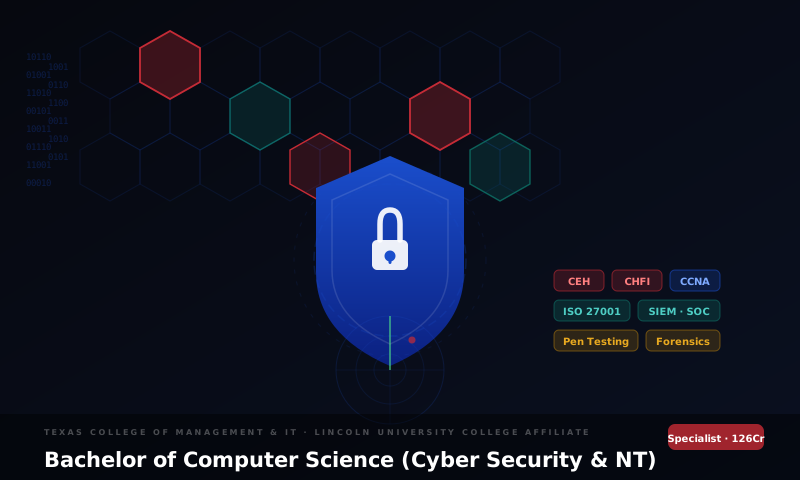
The degree usually covers programming languages, data structures, database systems, web and software development, and networking, building toward a final-year specialization. At Texas College of Management and IT, for example, the Bachelor of Computer Science (BCS) includes a Network Technology & Cyber Security track. It’s built for students who want to go deeper into that direction rather than staying general-purpose in software.
BIT: Technical Skills Meet Business and Management
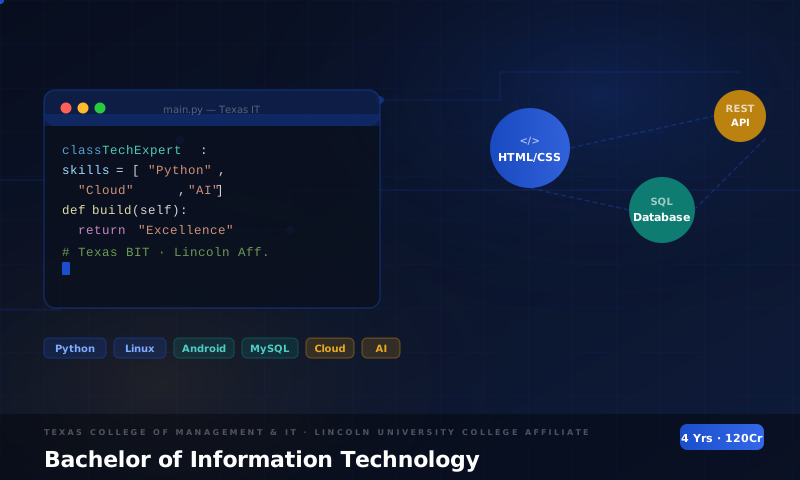
BIT sits between a pure computer science degree and a business degree, teaching IT skills alongside management, communication, and organizational modules. It suits students who like technology but also want to understand how IT decisions connect to business operations, budgets, and teams, rather than coding in isolation.
This hybrid shape makes BIT a common choice for students aiming at IT support and systems roles, business analysis, or IT project coordination. It also suits students eyeing an MBA-style path later, after building technical grounding first. The Bachelor of Information Technology (BIT) programs in Kathmandu generally combine core IT subjects with management electives for exactly this reason.
BSc CSIT: TU’s Theory-Heavy Default, and Why Some Students Look Elsewhere
BSc CSIT is Tribhuvan University’s flagship computer science degree, entrance-exam based. It’s the most commonly chosen option simply because TU has the widest college network in Nepal. It leans more theoretical than BCS or BIT, with a strong mathematics and computer science fundamentals base before students specialize.
That theory depth is a genuine strength for students planning graduate study or research-oriented careers. But it’s also exactly why some +2 graduates look at foreign-affiliated alternatives instead. BSc CSIT’s entrance exam is competitive and seat-limited at top colleges. Its curriculum revision cycle moves on TU’s schedule rather than an industry-partner’s. Continuous-assessment models, common in foreign-affiliated degrees, also suit some students better than a heavy exam-based structure. Recognition abroad, program duration, and total cost factor into that comparison too, and none of these three degrees is objectively “better” in the abstract, only better for a specific goal.
Computer Engineering: Hardware, Systems, and a Different Accrediting Body
Computer Engineering is a full engineering degree, accredited through the Institute of Engineering (IOE) rather than a science faculty or foreign university. It’s the right answer for “computer engineering vs IT bachelor Nepal” searches. It covers hardware design, embedded systems, computer architecture, and engineering mathematics well beyond what BCS, BIT, or BSc CSIT touch.
If you’re drawn to how hardware and processors actually work, not just the software layer on top, Computer Engineering is a structurally different degree. It’s not a stricter version of BSc CSIT. Its entrance route, fee structure, and career track (often toward embedded systems, telecom, or further engineering study) also run separately from the other three.
Decision Checklist: Which Should You Choose?
Match your decision to what you’ll actually be doing day to day in each program, not to how the name sounds to relatives. Use the checklist below as a starting filter, then confirm details on the specific program page before applying.
- Choose BCS if you want to write code, build software, and possibly specialize in network technology and cyber security.
- Choose BIT if you like technology but also want business, management, and communication skills built into the same degree, see the BIT program details.
- Choose BSc CSIT if you want TU’s widest college network, a theory-heavy foundation, and you’re comfortable with an entrance-exam-based admission process.
- Choose Computer Engineering if hardware, embedded systems, and engineering fundamentals interest you more than software alone, and you’re prepared for an IOE-accredited engineering track.
Cyber Security as a Specialization in Nepal

Cyber security in Nepal is rarely offered as a standalone bachelor’s degree. Instead, it’s almost always a specialization track inside a broader IT or computer science program. So if you searched “cyber security course Nepal” expecting a dedicated four-year degree, that’s not quite how it works here. What you’ll actually find in most colleges is a track or major within BCS, BSc CSIT, or similar programs.
That track structure isn’t a downgrade. It just means cyber security knowledge sits on top of a solid programming and networking foundation, which is arguably how the field works in practice anyway. A student in BCS’s Network Technology & Cyber Security track, for instance, first builds core programming and networking skills. Later years move into subjects like network security, ethical hacking fundamentals, cryptography basics, and security operations.
Master’s Options After a Bachelor’s in IT/CS
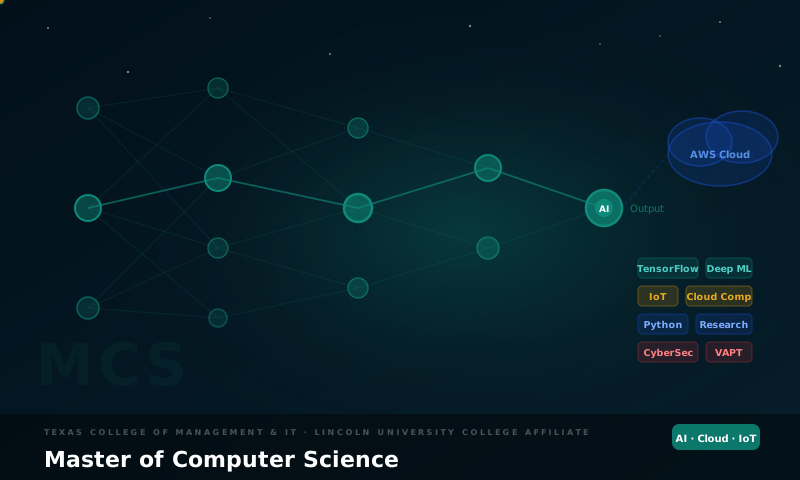
There are two realistic postgraduate routes after a BCS, BIT, or BSc CSIT. One is a Master of Computer Science (MCS), typically built around working IT professionals over about two years. The other is a generic MSc CS through TU or KU, which tends to run longer and lean more academic or research-focused. Neither is universally “better,” they’re built for different situations.
An MCS is usually structured so someone already working in IT can study alongside their job. Course scheduling and content aim at applied, industry-relevant skills rather than pure theory. This is a meaningfully different value proposition from a traditional MSc CS. An MCS assumes you already have work experience and want to formalize and extend it. A research-track MSc, by contrast, assumes you’re heading toward academia, a PhD, or a highly specialized technical role.
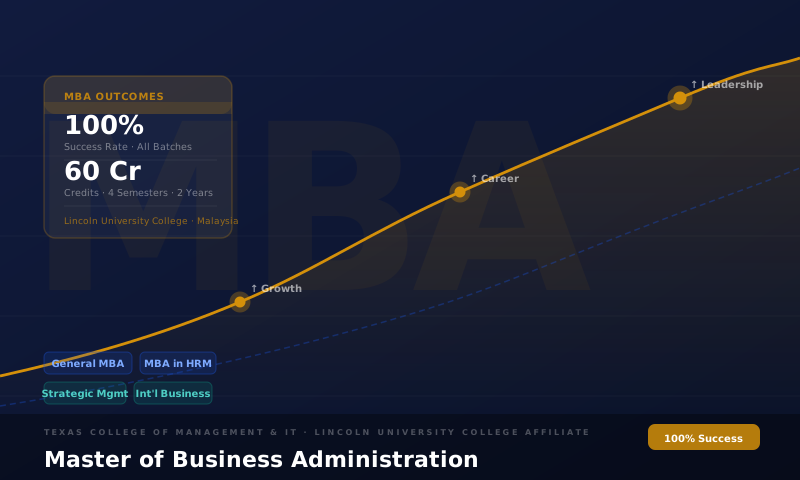
If you graduated with a BIT or BBIT and want to move into IT leadership rather than deeper technical specialization, an MBA combined with IT experience is also worth considering. That’s a separate path from either master’s option covered here. For students staying within computer science specifically, the Master of Computer Science (MCS) program is designed around that working-professional structure. Intake timing and course load are built to accommodate people already employed in the field.
Career Scope After an IT/CS Degree in Nepal
Career outcomes after IT and computer science degrees in Nepal generally split into four broad tracks: software development, network and security roles, IT management, and further study abroad. Which track fits best usually traces back to your degree choice. BCS graduates skew toward development and security roles. BIT graduates skew toward IT-plus-business roles.
Software development remains the most visible outcome for BCS and BSc CSIT graduates. Work ranges from local software companies and startups to remote, outsourced development for international clients, a pattern that has grown as Nepal’s IT services sector has expanded. Network and security roles draw specifically from students who completed a cyber security specialization track. These feed into IT infrastructure, system administration, and security operations positions at banks, telecoms, and larger enterprises.
BIT and BBIT graduates more often move into IT management, business analysis, or hybrid technical-operations roles. Their coursework already blends IT with organizational and communication skills. A meaningful share of graduates across all these degrees also pursue further study abroad, particularly in countries with established pathways for Nepali IT graduates. They use their bachelor’s as a foundation for a master’s overseas rather than an immediate local job.
Rather than quoting unverified salary figures, here’s the honest framing. Demand for IT skills in Nepal has been rising as more companies digitize operations and more international clients outsource development work here. Specialization, in security, cloud, or a specific programming stack, tends to matter more for earning potential than the degree name on its own.
Choosing a College for Your IT/CS Degree

The strongest signal for picking a college isn’t its ranking on a listicle. It’s whether the college meets four concrete criteria: verified accreditation and affiliation, adequate lab and technical infrastructure, exposure to industry certifications, and a track record of placement support. Checking these directly, rather than trusting marketing copy, tells you far more about the actual student experience.
Accreditation and affiliation should be your first check. Confirm whether the college’s foreign affiliation is active and recognized, and whether that recognition matters for your future plans, such as further study abroad or professional licensing. Lab and technical infrastructure matters concretely for IT/CS degrees specifically, since programming, networking, and security coursework needs functioning labs, not just classroom lectures.
Industry certifications built into the curriculum, such as networking, security, or cloud platform basics, add real value beyond the degree certificate itself. Ask whether these are included or need to be pursued separately. Placement support means actual internship and job-placement assistance, not a vague “we help with placement” claim. Ask directly which companies have hired recent graduates.
Texas College of Management and IT is one option that fits this checklist. It’s affiliated with a recognized foreign university, and runs a full range of IT/CS programs (BCS, BIT, and MCS) alongside business and hospitality degrees, giving students a foreign-affiliated pathway without leaving Kathmandu. Whichever college you consider, apply these same four criteria consistently rather than relying on name recognition alone.
FAQ
Is BIT or BCS better for a career in software development?
BCS is generally the stronger fit for software development specifically, since its curriculum centers on programming, data structures, and software engineering from the start. BIT still includes technical coursework but splits time with business and management modules, making it better suited to hybrid IT-business roles than pure development work.
Can I study cyber security as a standalone degree in Nepal?
Not typically as an independent bachelor’s degree. Cyber security in Nepal is generally offered as a specialization track within a broader IT or computer science program, such as BCS’s Network Technology & Cyber Security track, built on top of core programming and networking coursework.
What’s the difference between BSc CSIT and BCS?
BSc CSIT is Tribhuvan University’s entrance-exam-based, theory-heavy computer science degree with the widest college network in Nepal. BCS runs through a foreign university affiliation, tends to be more applied and software-focused, and often includes named specialization tracks like cyber security within the same degree.
Is a foreign-affiliated IT degree recognized in Nepal?
Yes, provided the college’s affiliation with the foreign university is active and properly registered, foreign-affiliated degrees are recognized for employment in Nepal. It’s still worth directly confirming a specific college’s current affiliation status before enrolling, since recognition depends on that affiliation staying active.
What can I study after a bachelor’s in IT, MCS or MSc CS?
It depends on your situation. An MCS is generally built for working IT professionals, runs about two years, and stays applied in focus. A traditional MSc CS through TU or KU tends to run longer and lean more research-oriented, better suited to students aiming at academia or highly specialized technical work.
Choosing Your Path Forward
BCS, BIT, BSc CSIT, and Computer Engineering aren’t interchangeable versions of “an IT degree.” They’re four different programs built around four different centers of gravity: software, business-IT hybrid, theory, and hardware engineering. Cyber security fits in as a specialization within these degrees, not as its own bachelor’s. Your master’s options later, MCS versus MSc CS, split along similarly practical lines.
The right choice comes down to matching the degree’s actual daily coursework, not its name, to what you want to be doing five years from now. If you’re still weighing this against business, management, or hospitality paths more broadly, our guide to choosing a course after +2 in Nepal covers all the stream options side by side.
Ready to look at specifics? Explore the Bachelor of Computer Science (BCS), Bachelor of Information Technology (BIT), and Master of Computer Science (MCS) program pages at Texas College of Management and IT to see curriculum details, specialization tracks, and admission requirements for each.